
MOUSAI WELLNESS CENTER
Longevity & Anti-Aging · Comprehensive Blood Check
P-tau Protein : A Blood Test to Assess
Alzheimer's Disease Pathology
A blood-based biomarker offering a minimally invasive way to detect
Alzheimer's-related changes in the brain.


Alzheimer’s disease remains the most common cause of dementia worldwide, and for decades, confirming its underlying pathology required invasive or costly procedures such as a lumbar puncture or PET imaging. In recent years, blood-based biomarkers — particularly phosphorylated tau, or p-tau — have emerged as one of the most significant advances in Alzheimer’s diagnostics, offering a minimally invasive way to detect disease-related changes in the brain.
What Is Tau, and What Happens When It Becomes p-tau?
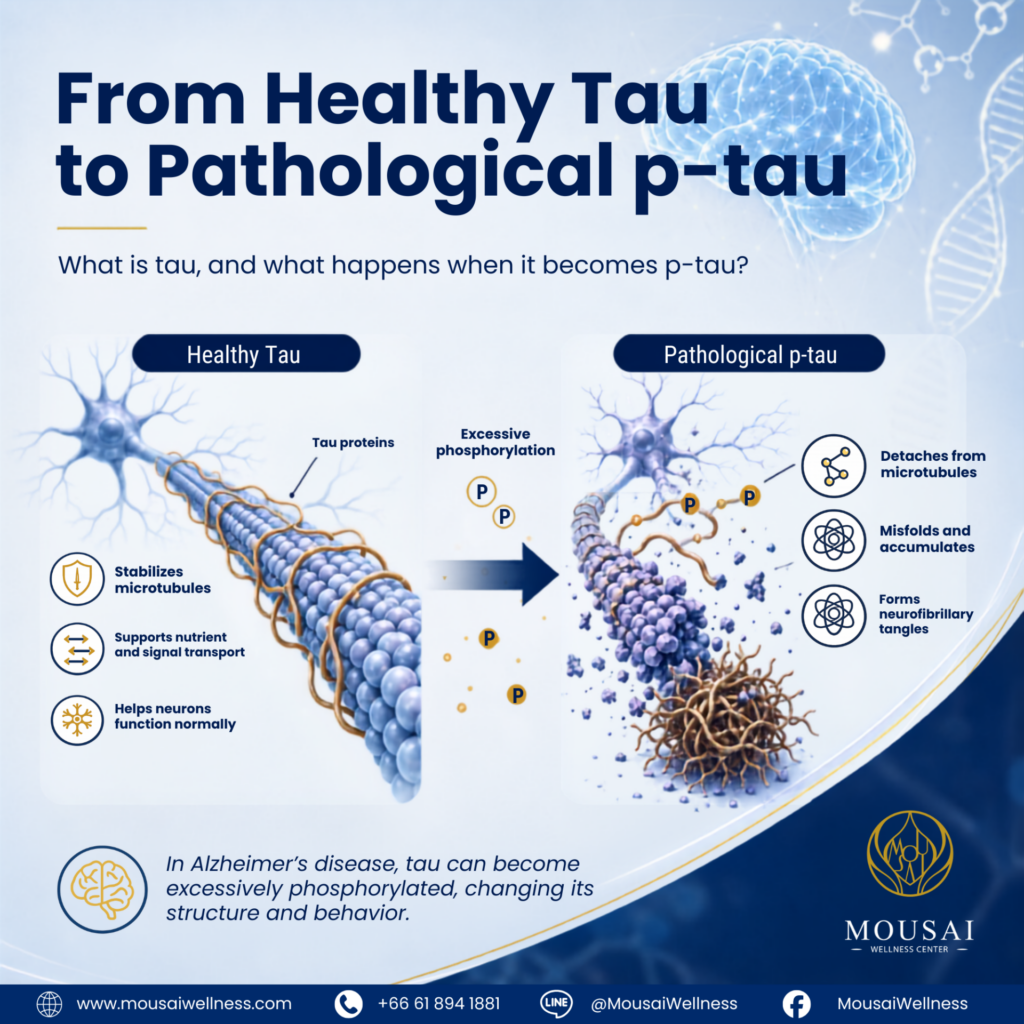
Tau is a protein that stabilizes microtubules, the internal structures that give neurons their shape and allow nutrients and signaling molecules to move efficiently within the cell. Under normal conditions, tau supports healthy neuronal function.
In Alzheimer’s disease, tau undergoes excessive phosphorylation — a chemical modification that causes it to detach from microtubules, misfold, and accumulate into neurofibrillary tangles. This altered form of the protein is known as p-tau. Several distinct p-tau species exist, classified by the specific amino acid position where phosphorylation occurs, most notably p-tau181, p-tau217, and p-tau231.
Blood concentrations of these p-tau forms correlate with two hallmark features of Alzheimer’s pathology: amyloid-beta accumulation and tau-related neurodegeneration. This dual association is what makes p-tau a particularly powerful biomarker compared with earlier blood-based tests.
Why p-tau Testing Matters
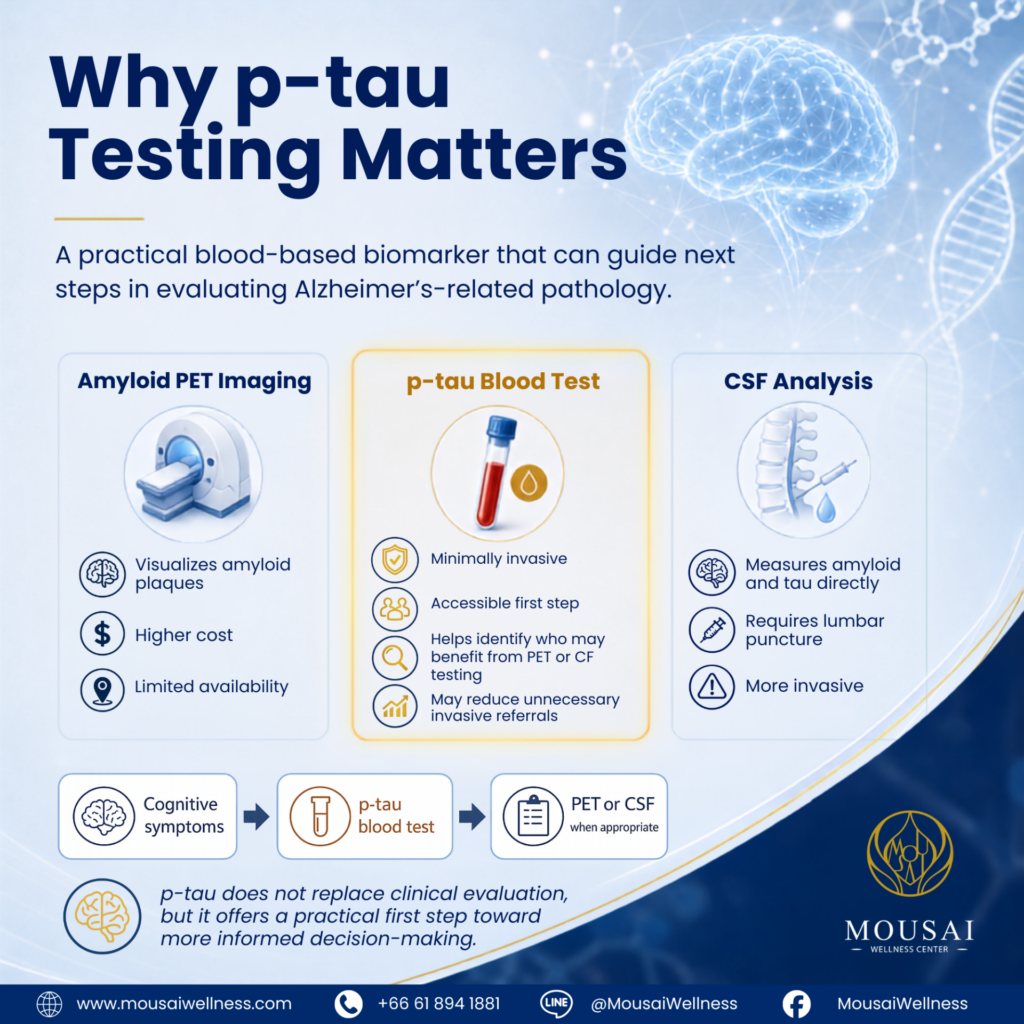
Historically, confirming Alzheimer’s-related pathology required either:
- Amyloid PET imaging — a scan using a radioactive tracer to visualize amyloid plaques, or
- Cerebrospinal fluid (CSF) analysis — requiring a lumbar puncture to measure amyloid and tau levels directly.
Both methods are effective but come with significant limitations: cost, limited availability, and patient discomfort. p-tau blood testing offers a practical alternative that can:
- Serve as an accessible first step in evaluating patients with cognitive symptoms
- Help identify individuals who are likely to benefit from confirmatory PET or CSF testing
Reduce unnecessary referrals for more invasive procedures
The Main p-tau Biomarkers
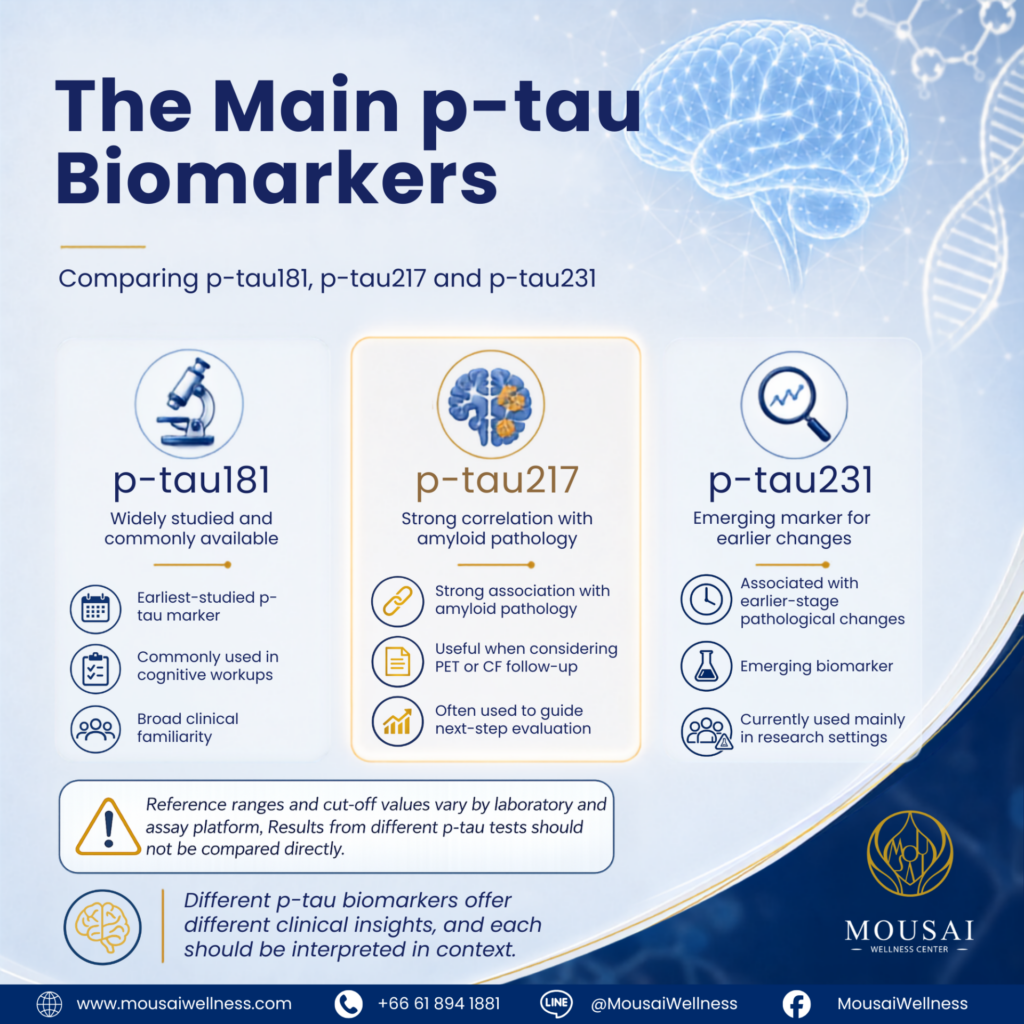
Marker | Clinical Relevance |
p-tau181 | The earliest-studied and most widely available p-tau marker; commonly used in routine cognitive workups. |
p-tau217 | Shows the strongest correlation with amyloid pathology among current markers; frequently used to determine whether further imaging or CSF testing is warranted. |
p-tau231 | An emerging marker associated with earlier-stage pathological changes; currently used primarily in research settings. |
Reference ranges and cut-off values differ between laboratories and assay platforms. Results from different p-tau tests should not be compared directly.
Who Should Consider p-tau Testing?
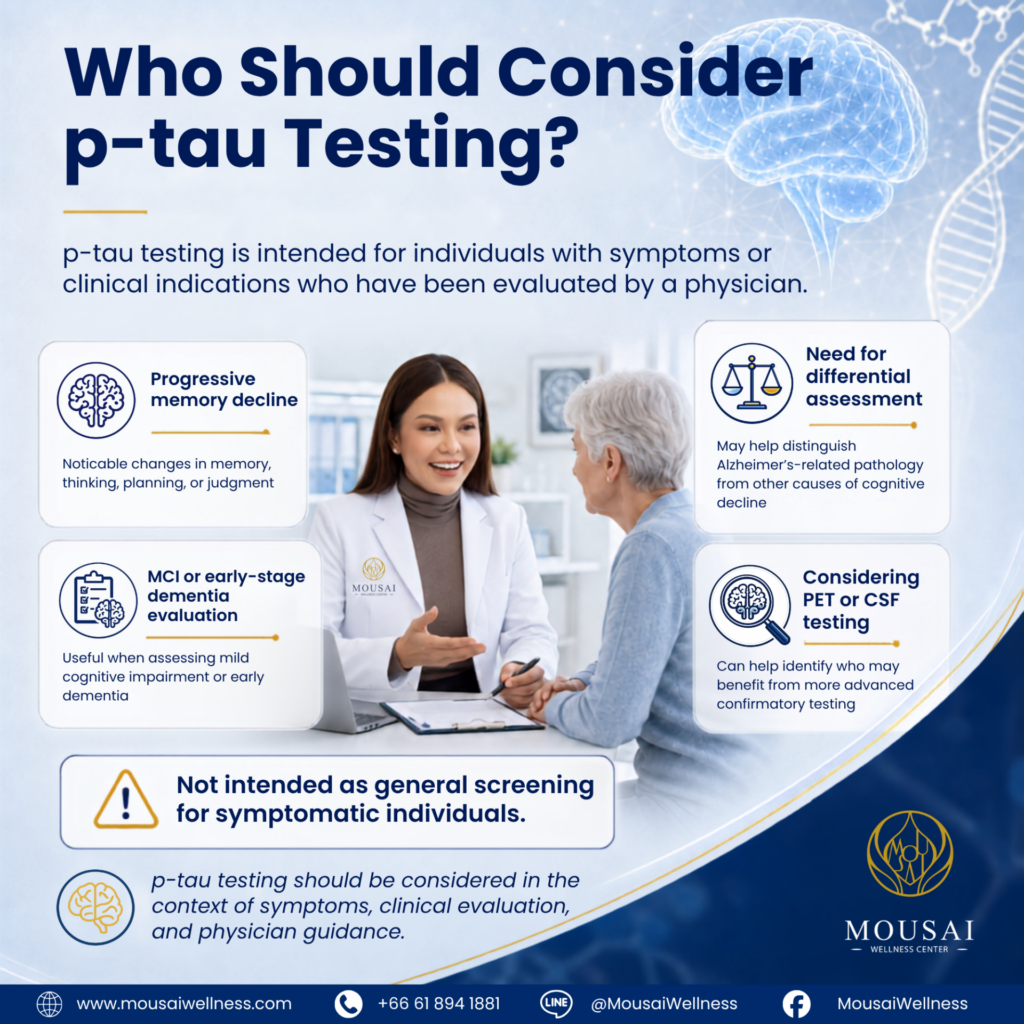
p-tau testing is intended for individuals with symptoms or clinical indications who have been evaluated by a physician. It is not designed as a general screening tool for asymptomatic individuals. Testing may be appropriate for:
● Individuals experiencing progressive memory decline or noticeable changes in thinking, planning, or judgment
● Patients being evaluated for mild cognitive impairment (MCI) or early-stage dementia
● Cases where a physician needs to differentiate Alzheimer’s-related pathology from other causes of cognitive decline
● Patients being considered for more advanced testing, such as amyloid PET or CSF biomarker analysis
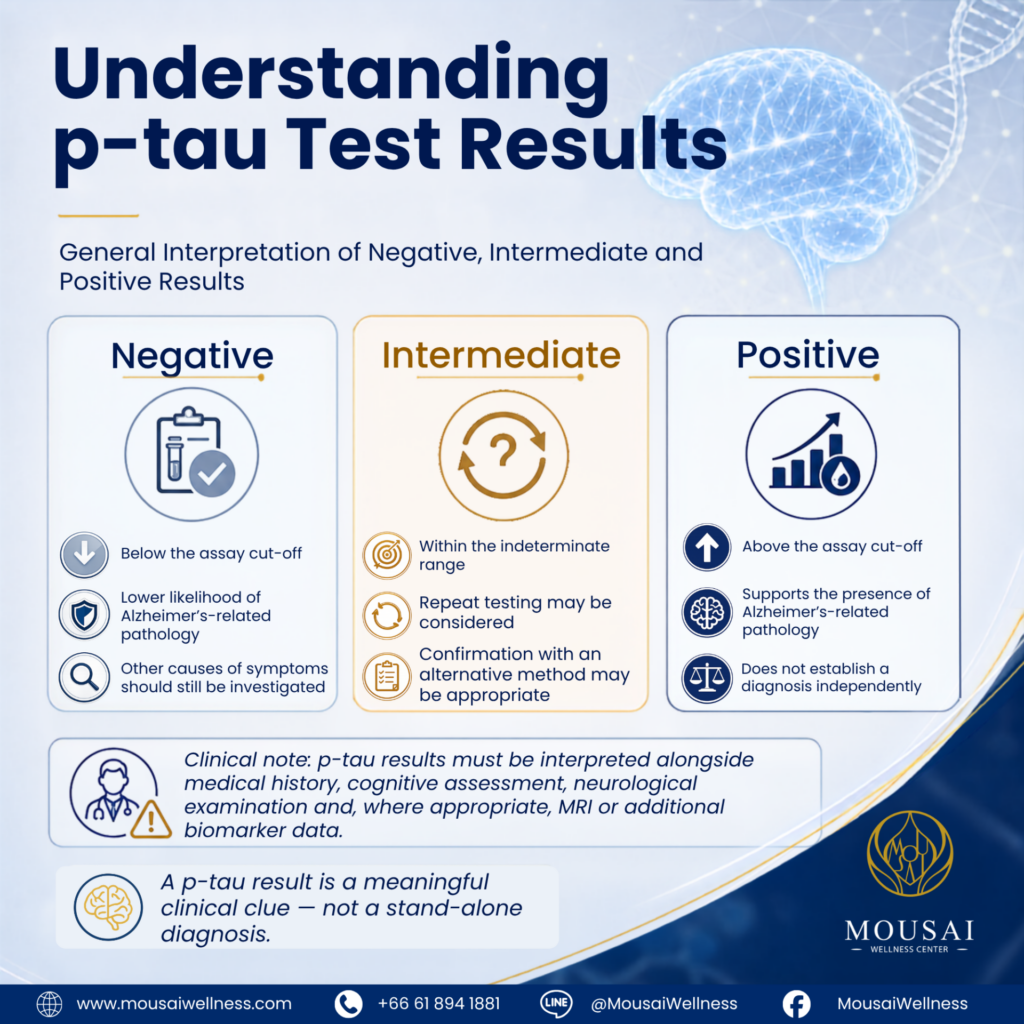
General Interpretation of Results
Result | General Meaning | Clinical Consideration |
Negative | Below the assay cut-off | Lower likelihood of Alzheimer’s-related pathology; other causes of symptoms should still be investigated. |
Intermediate | Within the indeterminate range | Repeat testing or confirmation with an alternative method may be considered. |
Positive | Above the assay cut-off | Supports the presence of Alzheimer’s-related pathology but does not establish a diagnosis independently. |
CLINICAL NOTE
As with all biomarker testing, results must be interpreted alongside medical history, cognitive assessment, neurological examination, and, where appropriate, MRI or additional biomarker data.
How p-tau Differs from ApoE Genetic Testing
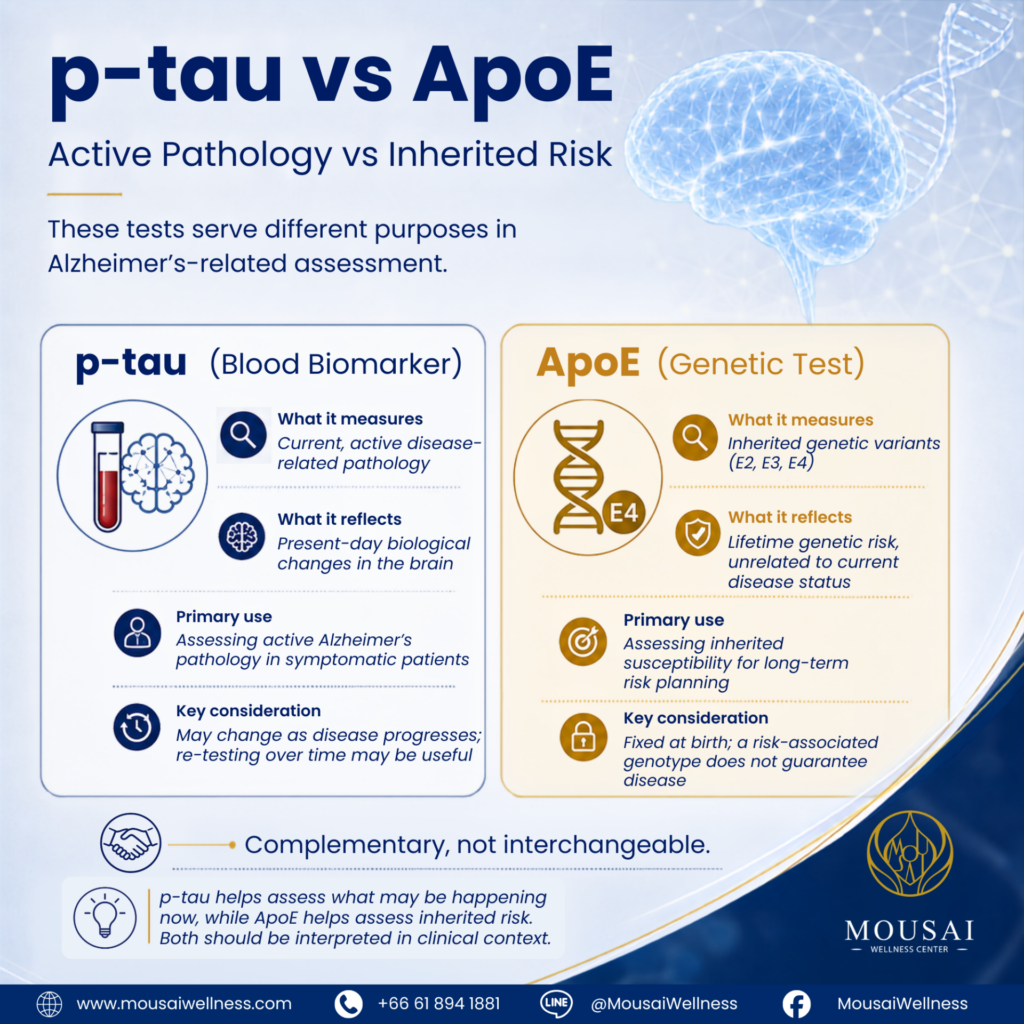
Patients are sometimes uncertain how p-tau testing relates to ApoE genetic testing, which is also used in Alzheimer’s risk assessment. The two serve different purposes:
Category | p-tau (Blood Biomarker) | ApoE (Genetic Test) |
What It Measures | Current, active disease-related pathology | Inherited genetic variants (E2, E3, E4) |
What It Reflects | Present-day biological changes in the brain | Lifetime genetic risk, unrelated to current disease status |
Primary Use | Assessing active Alzheimer’s pathology in symptomatic patients | Assessing inherited susceptibility for long-term risk planning |
Key Consideration | May change as disease progresses; requires re-testing over time | Fixed at birth; a risk-associated genotype does not guarantee disease |
Because they assess different aspects of Alzheimer’s risk, p-tau and ApoE testing are often complementary rather than interchangeable.
Preparation Before the Test
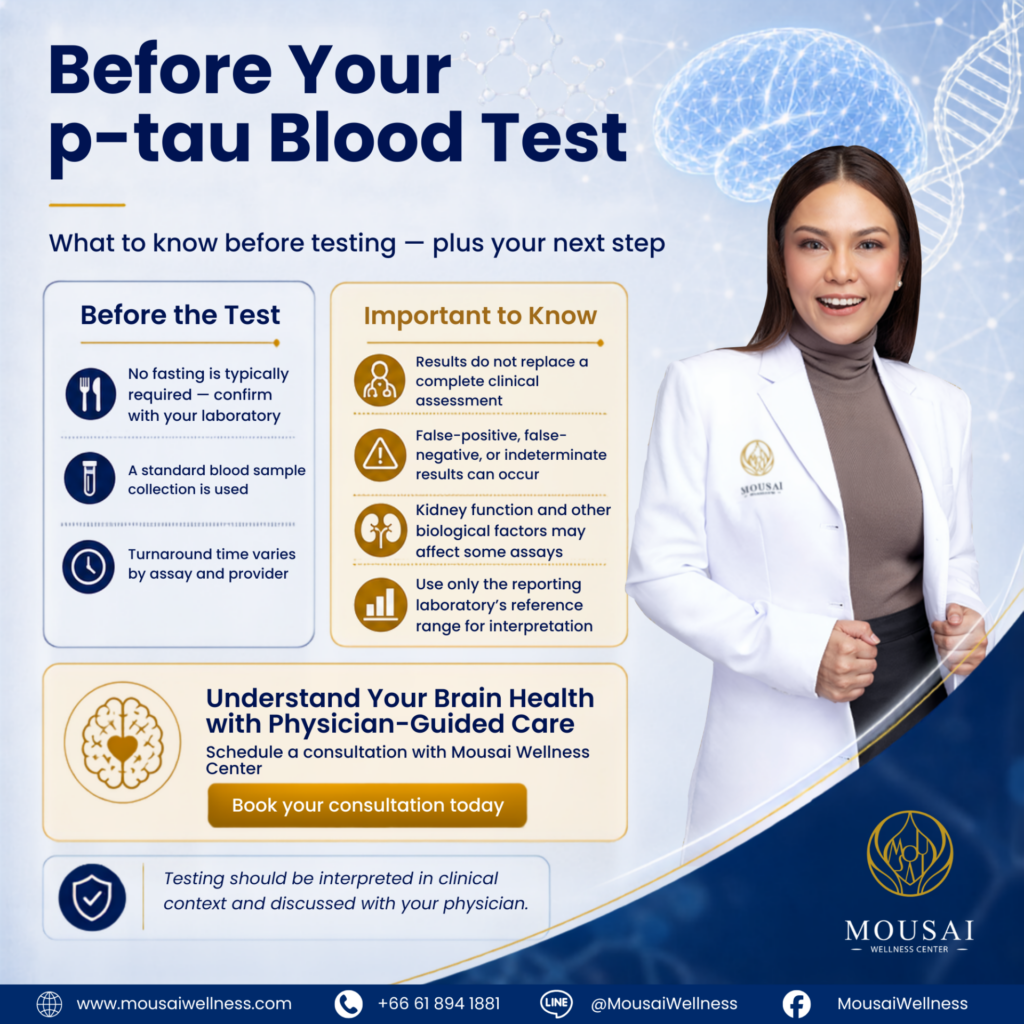
- No fasting is typically required, though patients should confirm this with their laboratory
- A standard blood draw is used for sample collection
- Results are generally available within a standard laboratory turnaround period, which varies by assay and provider
Limitations to Understand
- p-tau results do not replace a full medical history, physical examination, or cognitive assessment
- False-positive, false-negative, or indeterminate results can occur
- Certain biological factors, including kidney function, may affect biomarker levels depending on the assay used
- Cut-off values vary by testing platform; only the reporting laboratory’s reference range should be used for interpretation
- Testing asymptomatic individuals solely to predict future risk is not recommended without physician guidance
Key Takeaway
p-tau biomarkers — particularly p-tau181, p-tau217, and p-tau231 — represent a significant advancement in Alzheimer’s disease assessment, offering a minimally invasive alternative to PET imaging and cerebrospinal fluid testing. While not diagnostic on their own, they provide clinically meaningful evidence that, combined with a physician’s evaluation, supports earlier and more informed decision-making in the assessment of cognitive symptoms.
Curious About Your Brain Health?
Contact Mousai Wellness Center to schedule your p-tau test today, and take the first step toward understanding your long-term brain health with precision, physician-guided care.
Call: 02-096-4991 · 061-894-1881 Location: Sukhumvit 39, Bangkok
This article is for general education and does not replace medical advice. Individuals with concerns about memory or cognitive changes should consult their physician to determine whether p-tau testing is appropriate.