
FOOD ALLERGY TEST
FOOD INTOLERANCE
Food intolerance refers to adverse physical reactions triggered by certain foods, often contributing to chronic symptoms that may not appear immediately. These delayed responses—sometimes taking up to three days—make it difficult to identify the culprit. Symptoms can linger for weeks, leading to prolonged discomfort and misdiagnosis.
The Food Intolerance Test helps identify specific foods that may be causing these issues by measuring IgG antibody levels through a simple blood test. This allows you to avoid trigger foods and prevent ongoing health problems. The Food Intolerance Test measures IgG levels for specific allergens, covering up to 222 allergens.
What Does the Food Intolerance Test Cover?
Modern testing makes it easy and efficient to detect food intolerances. This test identifies IgG antibody reactions to over 200 different food items, grouped into major food categories, including:
Grains containing gluten
Grains without gluten
Vegetables
Wheat
Fish and seafood
Meat
Herbs and spices
Nuts and seeds
Others

Common Symptoms of Food Intolerance
Symptoms vary by individual and often go unlinked to specific foods because of their delayed onset. These can include:
- Skin rashes or hives
- Nasal congestion, sneezing, or persistent cough
- Chronic skin inflammation
- Migraines or recurring headaches
- Difficulty losing weight or unexplained weight gain

Food intolerances usually cause low-grade, chronic symptoms that do not pose immediate danger but can significantly reduce quality of life. These may present as bloating, diarrhea, fatigue, brain fog, or inflammatory skin conditions.
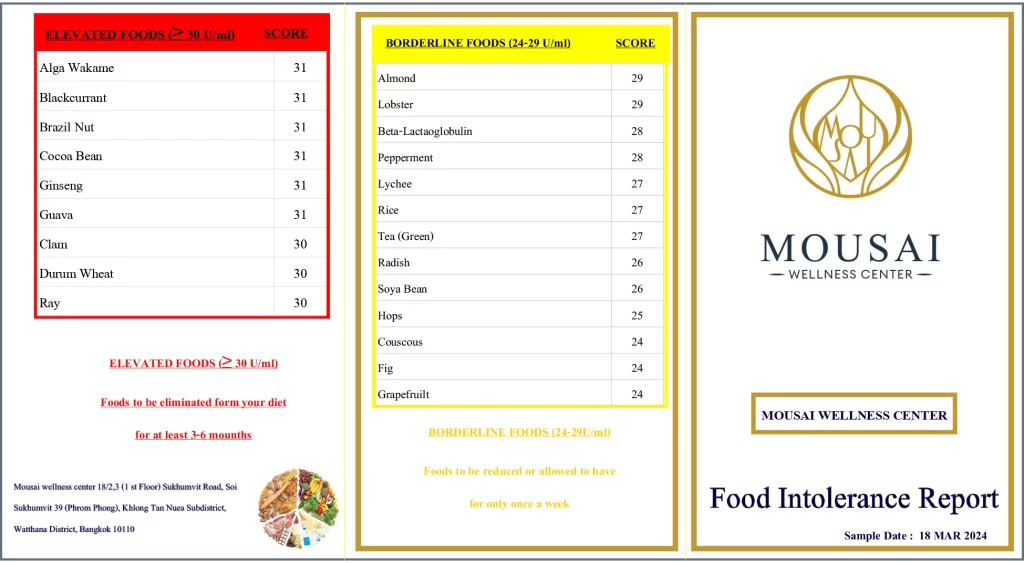
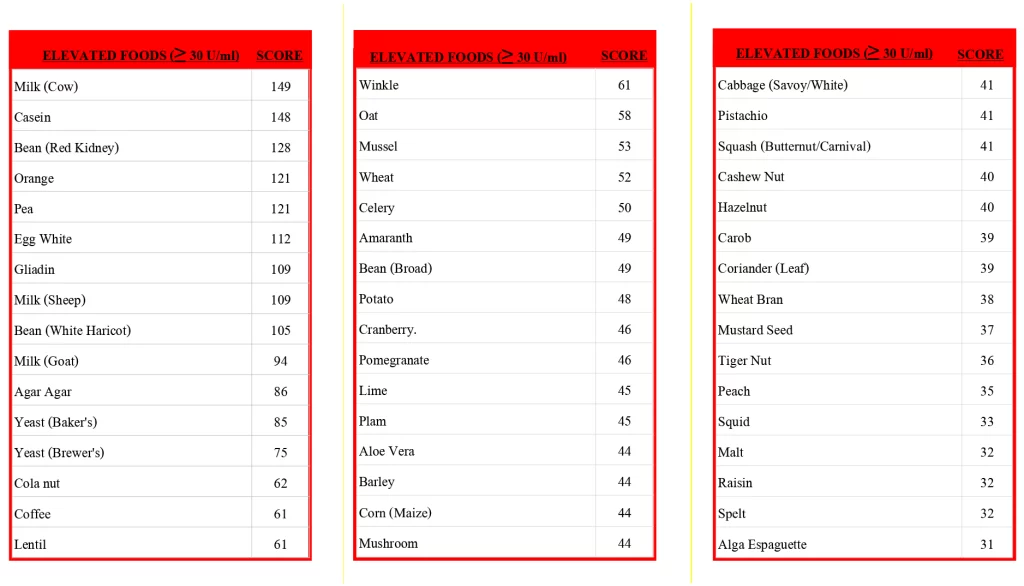
List of All Food Intolerance Tests, Categorized by Allergy Level:
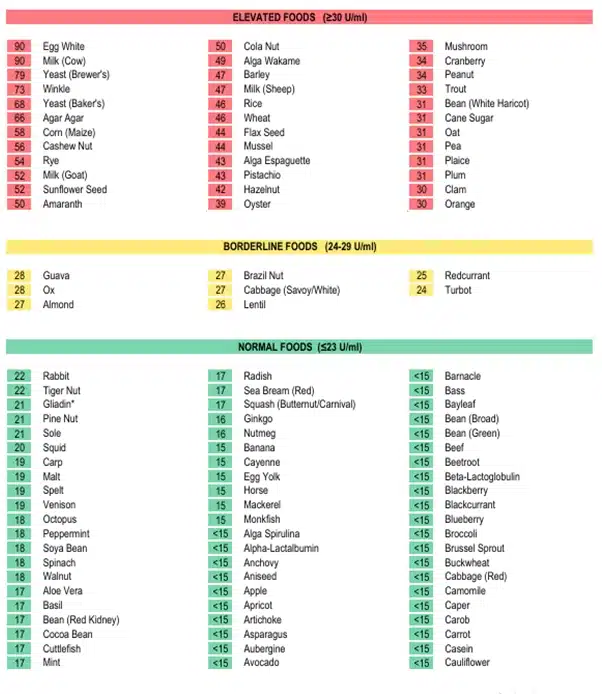

ELEVATED FOODS (≥30 U/ml)
99
Milk (Cow)
63
Cashew Nut
45
Orange
83
Egg White
59
Watermelon
44
Potato
76
Pea
53
Barley
37
Bean (White Haricot)
69
Casein
52
Corn (Maize)
36
Yeast (ฺBrewer’s)
65
Agar Agar
50
Cola Nut
32
Pistachio
65
Peanut
49
Milk (Goat)
30
Plum
64
Milk (Sheep)
46
Ginkgo
30
Sunflower Seed
ELEVATED FOODS (≥30 U/ml)
29
Wheat
25
Flax Seed
28
Rice
24
Radish
NORMAL FOODS (≤23 U/ml)
<15
Rabbit
17
Radish
22
Barnacle
<15
Tiger Nut
17
Sea Bream (Red)
22
Bass
<15
Gliadin
17
Squash (ฺButternut/Carnival)
21
Bayleaf
How Are the Results Displayed?
The Food Intolerance Test categorizes your body’s immune response to specific foods into three levels:
- Elevated – Indicates a high IgG antibody response, suggesting a strong intolerance to that food.
- Borderline – Suggests a moderate reaction that may or may not contribute to symptoms.
- Normal – Shows no significant IgG reaction, meaning the food is generally well tolerated.
The results are based on the concentration of IgG antibodies, measured in units per milliliter (U/ml).

Q&A: Food Allergy vs. Food Intolerance
Food allergy involves an immediate reaction caused by IgE antibodies—typically within minutes of eating foods like peanuts or shellfish. Symptoms can be severe and may include swelling, itching, fatigue, or even anaphylaxis.
Food Intolerance refers to delayed responses involving IgG antibodies. Symptoms may appear 2–3 days after consumption, making it harder to identify the specific trigger.
How to Test for Food Intolerance:
- A simple blood draw using about 1–2 cc of blood is all that’s required.
Preparation Before Testing for Food Intolerance:
- Ensure you are well-rested before the test.
- Fasting is not required, and you may drink water as usual.
- Avoid taking immune-suppressing medications such as corticosteroids or antihistamines for 1–2 weeks prior, unless directed otherwise by your doctor.
ศึกษารายละเอียดเพิ่มเติมที่