P-tau Protein
When memory, planning, or judgment begins to change, how can you move beyond guesswork and toward a more informed assessment?
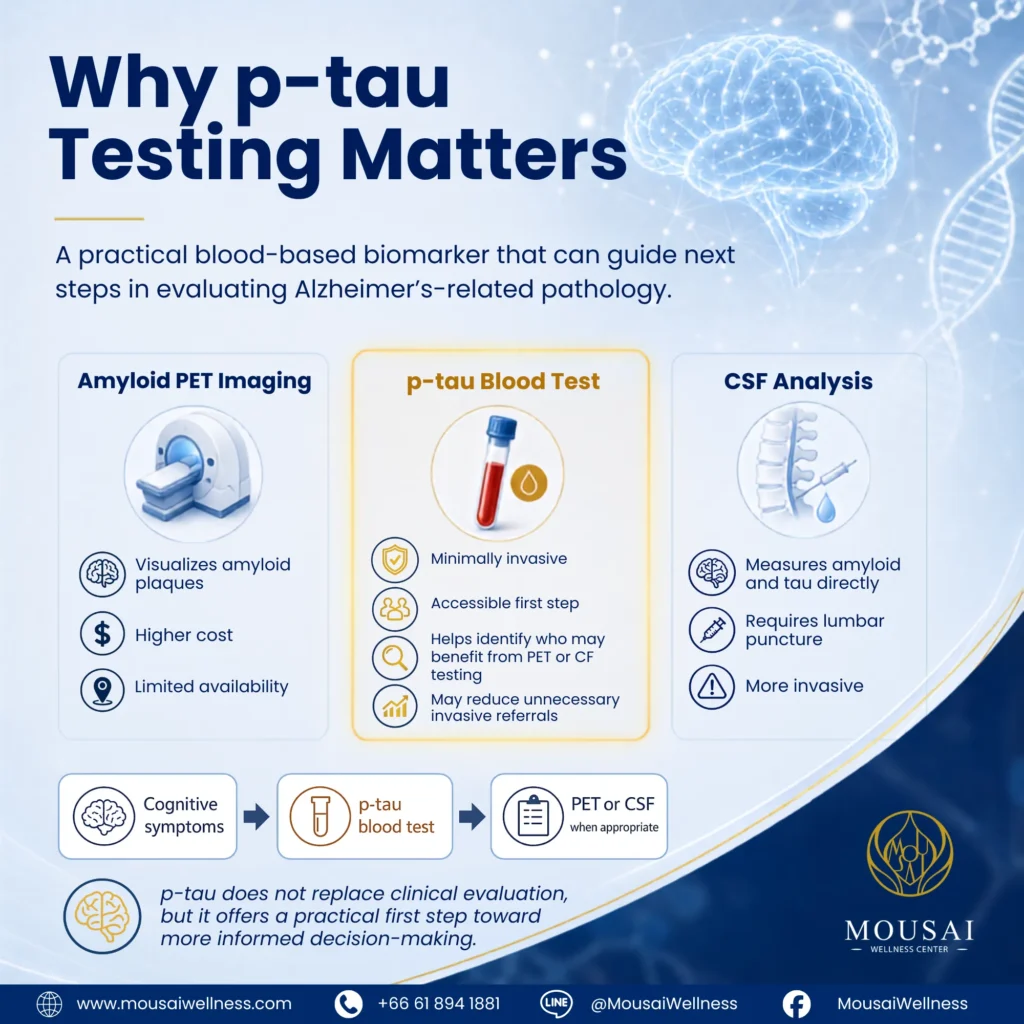
In the past, evaluating Alzheimer’s-related pathology often required procedures such as:
- Amyloid PET imaging
- Cerebrospinal fluid analysis
- More complex or invasive clinical investigations
Today, the p-tau blood test offers a minimally invasive way to help physicians assess biological changes associated with Alzheimer’s-related pathology through a standard blood draw.
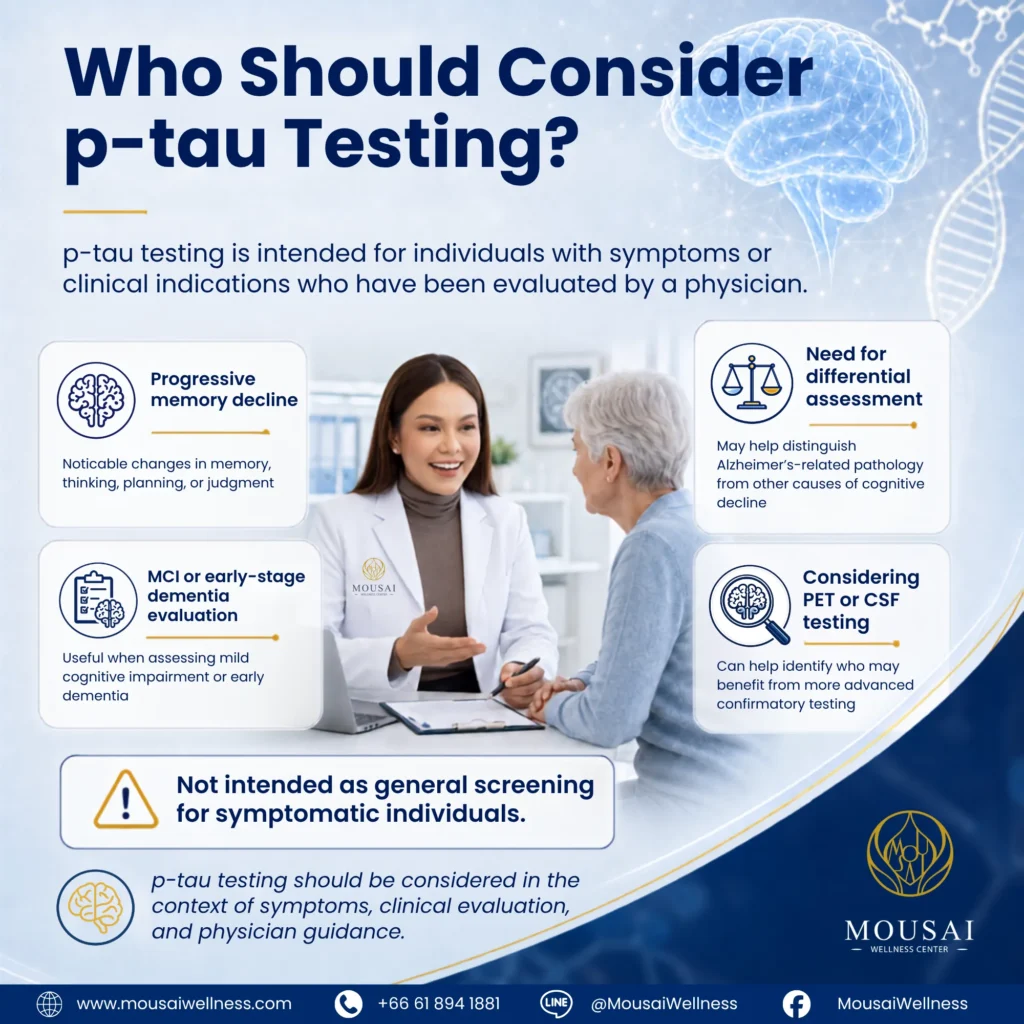
Who may be considered for p-tau testing?
A physician may consider testing for individuals experiencing:
- Progressive memory decline
- Changes in thinking, planning, or judgment
- Possible mild cognitive impairment, or MCI
- Early-stage dementia symptoms under medical evaluation
- A need to determine whether PET or CSF testing may be appropriate
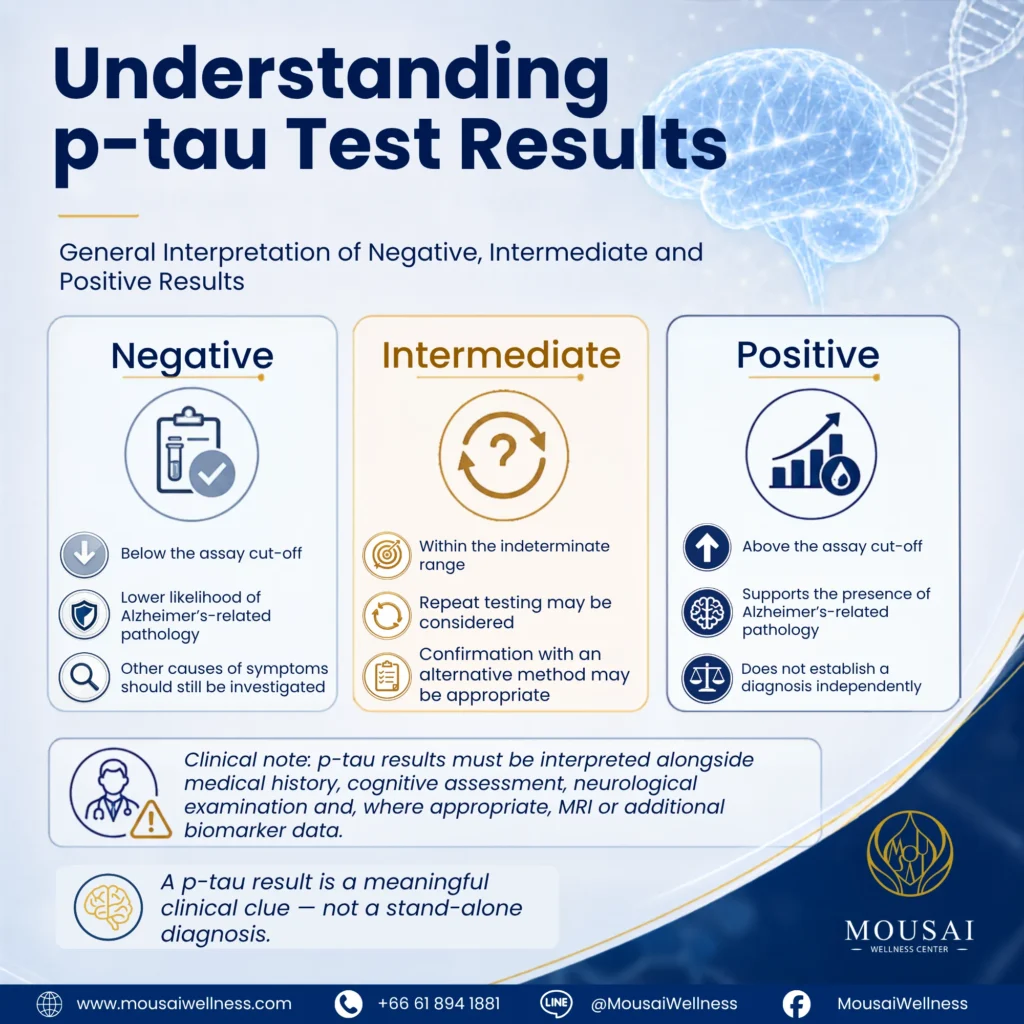
How are the results interpreted?
Results may be reported as:
Negative – A lower likelihood of Alzheimer’s-related pathology, although other causes of symptoms may still need investigation.
Intermediate – Repeat testing or confirmation through another method may be considered.
Positive – Supports the presence of Alzheimer’s-related pathology but does not establish a diagnosis independently.
A p-tau result is not a stand-alone diagnosis. It should be interpreted together with medical history, cognitive assessment, neurological examination, and other clinical findings where appropriate.
Take the first step toward understanding your brain health with precision and physician-guided care.
Schedule a consultation to determine whether p-tau testing is appropriate for you or a family member.
Mousai Wellness Center